5 Fascinating Facts About MIT's Physics-Based Violin Simulator
For centuries, luthiers have relied on intuition, craftsmanship, and trial-and-error to coax the perfect sound from a violin. Now, a team of MIT researchers has developed a groundbreaking computer simulation that models the instrument based on the laws of physics rather than recorded samples. This virtual violin doesn't replace the artisan's touch—but it could become a powerful new tool in the design process. Here are five key insights into this innovative technology and what it means for the future of violin making.
1. A True Physics-Based Simulation, Not a Sampling Tool
Most existing violin software creates sounds by stitching together thousands of pre-recorded notes, essentially averaging the sound to produce an artificial output. MIT's virtual violin takes a fundamentally different approach. It calculates the sound in real time using the physical equations that govern how a violin's strings, bridge, and body vibrate. This means every note is generated from scratch, based on the virtual instrument's exact dimensions and material properties. As a result, the simulator can reproduce the nuanced sound of a plucked string with striking realism, offering a level of detail that sampling methods simply cannot match.
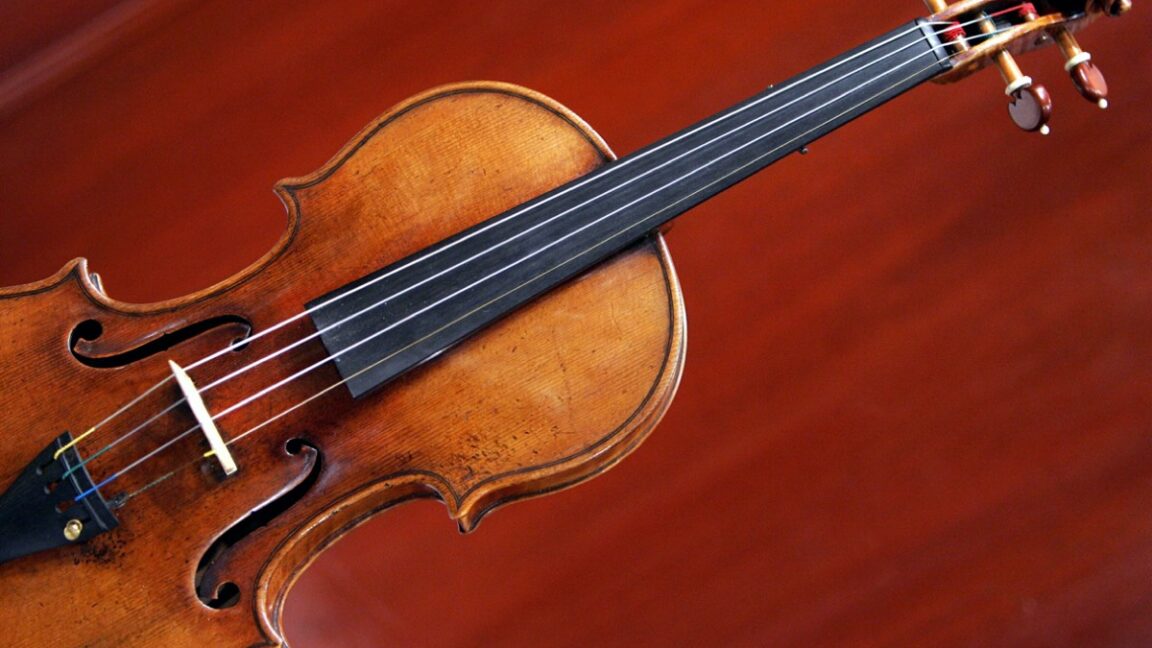
2. It Captures the Complex Physics of a Plucked String
The heart of the MIT model lies in its precise representation of string vibrations. When a string is plucked, it doesn't just vibrate at one frequency—it creates a complex pattern of harmonics that decay at different rates. The simulation accounts for the string's tension, stiffness, and damping, as well as the interaction with the bridge and the resonance of the wooden body. By solving the mathematical equations that govern these interactions, the virtual violin can produce a sound that evolves naturally over time, much like a real instrument. This physics-first approach gives luthiers a unique window into how subtle changes in materials or geometry affect the final tone.
3. Designed as a Collaborative Tool for Luthiers, Not a Replacement
The researchers are careful not to overstate their creation. "We're not saying that we can reproduce the artisan's magic," says co-author Nicholas Makris. Instead, the goal is to deepen the understanding of violin acoustics and assist luthiers in the design process. The virtual violin can test variations—like changing the thickness of the top plate or the shape of the f-holes—instantly, while a physical prototype would take weeks to build and test. This allows makers to explore new ideas more freely, then apply their craft to refine the best candidates. In this way, the simulator becomes a bridge between scientific modeling and traditional artistry.
4. It Could Help Unlock Secrets of the 'Golden Age' Violins
Violin acoustics has long fascinated scientists, especially the quest to explain the superior sound of instruments from the so-called Golden Age of violin making (roughly 1600–1750). The works of Antonio Stradivari, the Amati family, and Giuseppe Guarneri remain benchmarks of tonal quality. The MIT simulation can help researchers systematically test hypotheses about why these violins sound so distinctive—for example, how wood density, plate arching, or varnish chemistry contributed to their acoustics. While the tool won't replicate the genius of the old masters, it provides a controlled environment to isolate and study each variable, potentially revealing new principles that luthiers can apply today.

5. Part of a Long Tradition of Research into Violin Physics
MIT's virtual violin adds to a rich history of acoustic investigation. For decades, scientists have analyzed violins using everything from laser vibrometry to modal analysis. What sets this work apart is the integration of a full physics-based simulation that outputs audible sound in real time. This allows a luthier to hear the effect of a design change immediately, rather than just seeing it on a graph. The researchers hope that by making the tool accessible, they can foster closer collaboration between acousticians and instrument makers. The result could be a new era of violin design, where centuries-old craft is enhanced by modern computational insight.
In summary, MIT's virtual violin marks an exciting step forward for both science and craftsmanship. By grounding the simulation in fundamental physics, it offers a more accurate and insightful tool than existing sampling-based alternatives. While it will never replace the intuition and skill of a master luthier, it can accelerate the iterative design process and help answer the age-old question of what makes a truly great violin. As the tool continues to evolve, it may even inspire new instruments that honor tradition while embracing the possibilities of digital design.